Can I still use spreadsheets to keep my bookkeeping records?
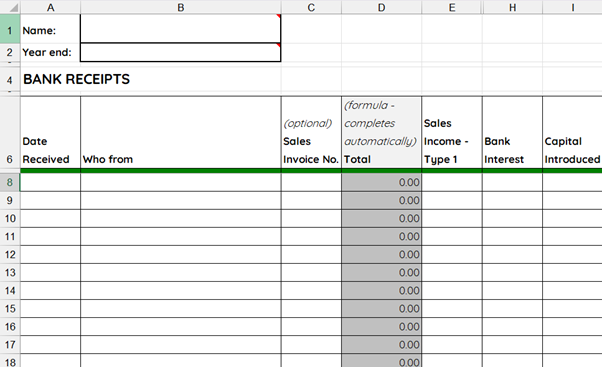
The short answer is – yes, you can – but here are some factors to consider:
Which tax system are you in?
If you’re in Self Assessment, spreadsheets are absolutely fine. You can keep your records in a spreadsheet and manually transfer the totals onto your tax return once a year.
If HMRC have moved you across to Making Tax Digital, you can still keep your records in a spreadsheet, but you will need a way of digitally transferring your figures directly from the spreadsheet to HMRC four times a year.
To connect your spreadsheet to HMRC’s computer system, you’ll need “bridging software”.
- If you use an accountant, they may have access to bridging software, either as a stand-alone product or through whatever tax software package they use. You’ll have to send them your spreadsheet four times a year so they can send your quarterly updates to HMRC using their software.
- If you don’t use an accountant, you’ll need your own bridging software.
So, at this point, you might be thinking “If I’m going to need get software to keep using my spreadsheets, should I just change to using accounting software to keep my day-to-day bookkeeping records?”
The choice is yours. Do you want to:
- Do-it-yourself using a 3-stage process: record your transactions in a spreadsheet, connect the spreadsheet to bridging software, and submit your quarterly update to HMRC?
- Do-it yourself using a 2-stage process: record your transactions in software, and submit the quarterly updates directly to HMRC from there?
- Send your spreadsheet to your accountant every quarter?
How soon before Making Tax Digital applies to you?
If your total income from self-employment and rental property combined, before deducting expenses, is more than £50,000 – you could need to comply with Making Tax Digital (MTD) in as little as 4 weeks’ time, from 6 April 2026.
If your total income from self-employment and rental property is between £30,000 and £50,000 – you’ve got just over a year to prepare, as you’ll need to comply with MTD from 6 April 2027.
If your total income from self-employment and rental property is between £20,000 and £30,000 – you’ve got 2 years to get ready for MTD starting from 6 April 2028.
Even if Making Tax Digital doesn’t apply to you yet, if your total income is over £20,000, it might be worth considering whether spreadsheets will still be what works best for you once HMRC move you across to the new tax system.
Is there an easier way to keep your records?
There are advantages to using software to keep your day-to-day bookkeeping records, including:
- Bank feeds. Some software packages can connect directly to your business bank account. The bank feed imports the date, who the payment was from or to, and how much it was for. All you need to do is tell the software what it was for. You can even set rules, so the system “knows” that all payments to Supplier A are for Expense Type X and categorises them automatically.
- AI assistance. Some software will suggest what category each receipt or payment belongs in. AI isn’t always right, but it can speed things up – and it’s learning all the time.
- Document storage. Hate paper filing? Some software packages allow you to take a photo of the invoice or till receipt and store an electronic version within the software. No more leafing through folders or rummaging for lost receipts. Click on the transaction record in the software and it will bring up a picture of the supporting document.
- Review and reporting options. If you use software, it’s easier to spot errors and to run reports that let you know how your business is doing.
- Making Tax Digital compliance. There are three software options for MTD compliance – all-in-one software packages that can do the quarterly updates and your end of year return; software that can do the quarterly returns but not the end of year; and software that can’t do quarterly submissions but can export the data in such a way that it can be imported into a package that can. The first two of these will almost certainly be quicker than using a spreadsheet with bridging software.
Support for doing your own bookkeeping
Springreach Training & Coaching offers accountability and professional support to anyone who is self-employed and interested in keeping their own bookkeeping records.
- If you do your own bookkeeping using spreadsheets, but are considering moving to software, Springreach can support you in making the transition.
- If you’re just starting out, and want to know how to keep good bookkeeping records in whatever system you choose, Springreach can support you too.
Whilst the best place to get support for Making Tax Digital is from your accountant, if your accountant doesn’t offer bookkeeping training or software support, Springreach Training & Coaching can help you learn how to do your own bookkeeping throughout the year so you can do your own quarterly updates and only use your accountant at the end of the year.
The Springreach DIY bookkeeping community opens its doors for the first time on 6th April. We’re offering a founder member rate of £15 per month to the first 10 people who sign up. Founder members retain the preferential rate for as long as they remain a member. The regular price will £25 per month. No commitment, cancel any time. If you’re interested in joining, please take a look at the Community page on the Springreach Training & Coaching website. It would be great to welcome you on board!